

Dubai firsthand: What I learned during my visit and conversation with the Investor planning to invest in Montenegro


Author: Rajko Milić
Investitor.me – CEO, main editor and journalist
Amid the peak summer heat of July, I visited Dubai as part of a Montenegrin press delegation, invited by prominent investor Mohamed Alabbar—the man behind spectacular projects that have transformed Dubai into a symbol of futuristic urbanism and a global business hub. The purpose: to tour key developments and speak directly with the investor. While the specific locations and scale of his planned investments in Montenegro remain undisclosed, Alabbar unequivocally confirmed his interest during our in-person meeting on the second day of the visit.
We were accommodated at the modern Vida Dubai Mall Hotel, physically connected to the iconic Burj Khalifa. There, we had the privilege of experiencing firsthand the development projects of Emaar Properties, where Alabbar serves as CEO and a key shareholder. We toured some of the Middle East’s most ambitious architectural and urban ventures—projects that blend luxury, functionality, and remarkable spatial planning.
Dubai Creek Harbour – A City of the Future on Water
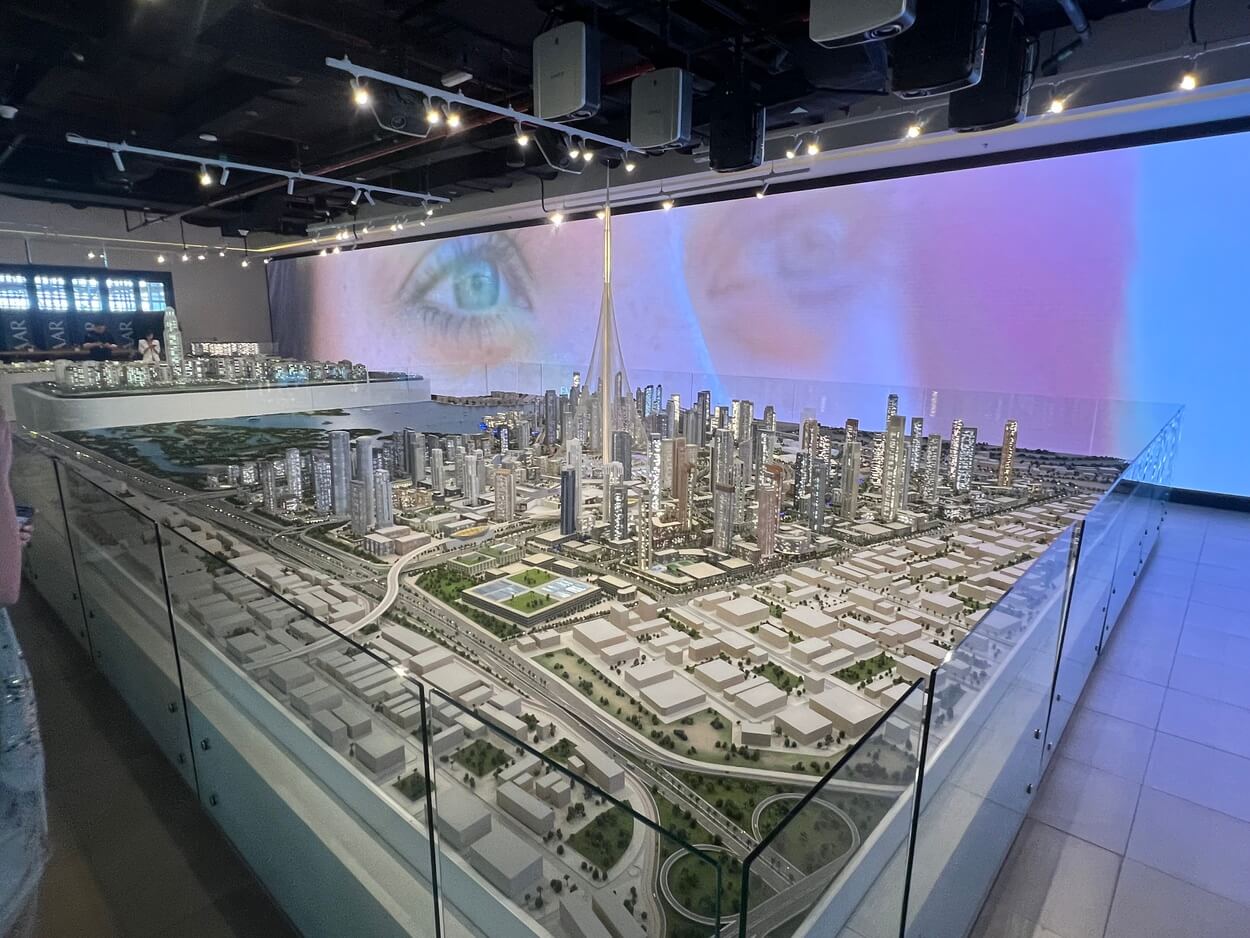
Dubai Creek Harbour is an ambitious urban mega-project by Emaar Properties, being developed along the shores of the historic Dubai Creek. It represents a visionary plan to build an entirely new city within the city, spatially more than twice the size of Downtown Dubai (home of the Burj Khalifa).
At the heart of this development will be the Dubai Creek Tower, a planned skyscraper set to surpass even the Burj Khalifa, aiming to symbolically redefine Dubai as the world capital of vertical architecture. Although construction has been temporarily slowed, the tower remains a key element of the new cityscape.
The project also includes:
- Dubai Creek Marina, an elite harbor for luxury yachts
- A shopping complex expected to surpass Dubai Mall in size
- Residential buildings overlooking a lagoon, promenades, parks, and public spaces
- An eco-conscious design focused on sustainability, renewable energy, and natural ventilation
Dubai Creek Harbour is more than an investment project—it is a manifestation of a new urban philosophy: the fusion of luxury, functionality, and sustainable construction.
Dubai Mall – A retail and entertainment hub in the heart of the city
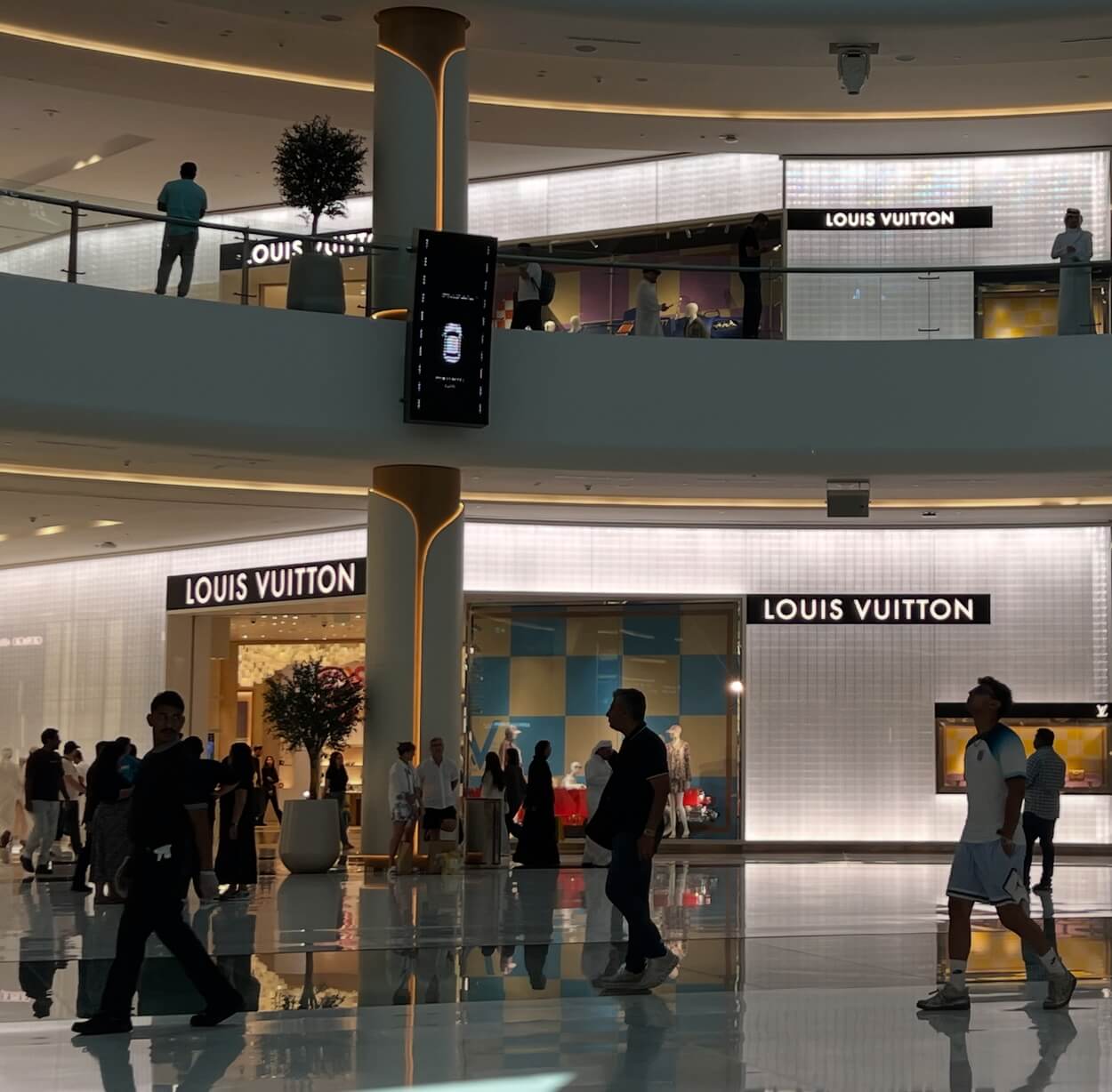
Located at the base of the Burj Khalifa, Dubai Mall is not only the world’s largest shopping center—it’s an urban microcosm where luxury, entertainment, gastronomy, and technology intersect across a staggering 1.1 million square meters.
The numbers speak for themselves:
- Over 1,200 stores, including all major global luxury and fashion brands
- The largest indoor aquarium and underwater zoo
- Olympic-sized ice rink, cinemas, and children’s theme parks
- A direct view of the Dubai Fountain, a world-class spectacle
- Over 100 million annual visitors
For Emiratis, Dubai Mall is not just a shopping venue—it’s a lifestyle space, social center, and tourist attraction. It mirrors Dubai’s ambition to remain a leader in global retail and experiential economy.
Dubai Hills Estate – An urban oasis in the desert
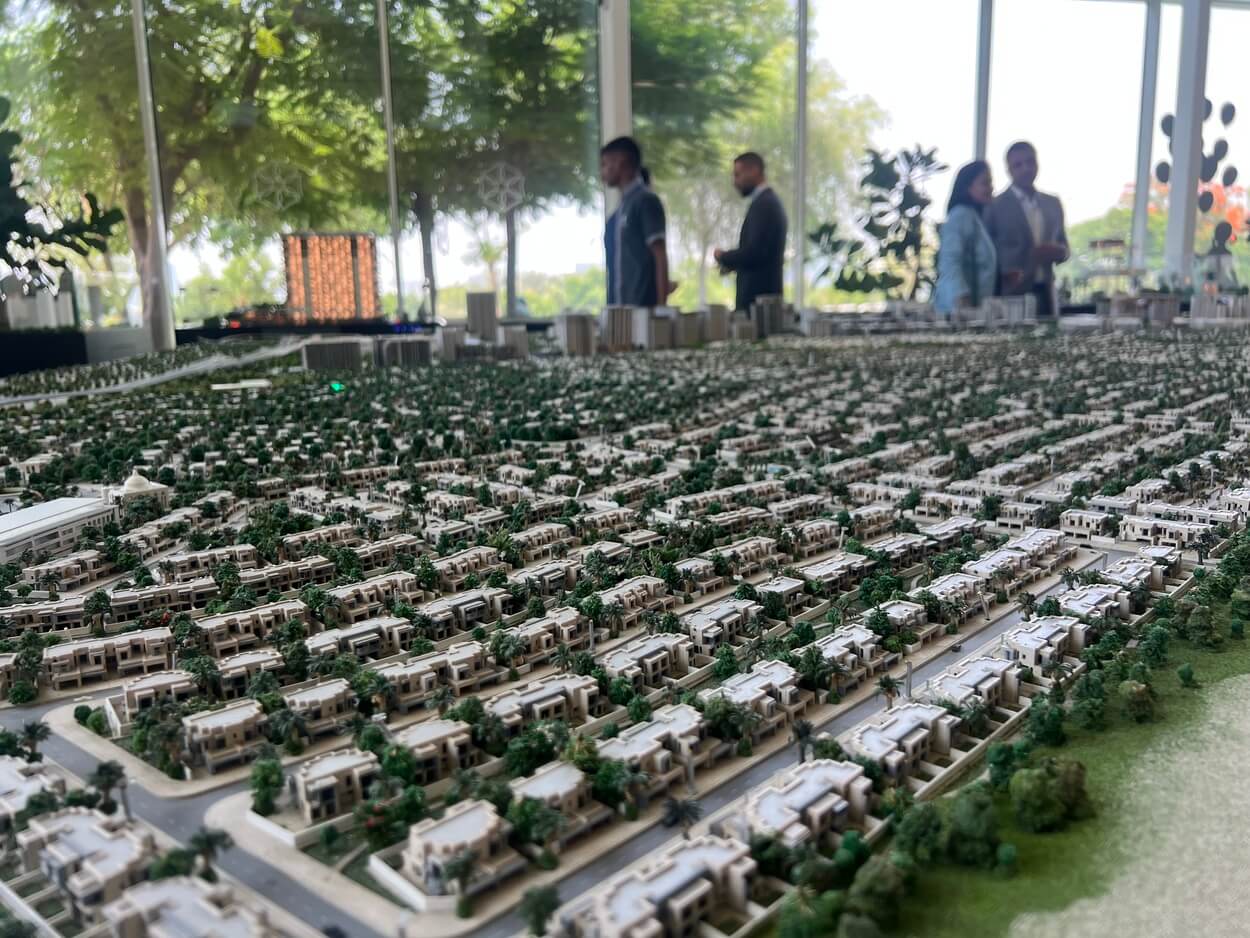
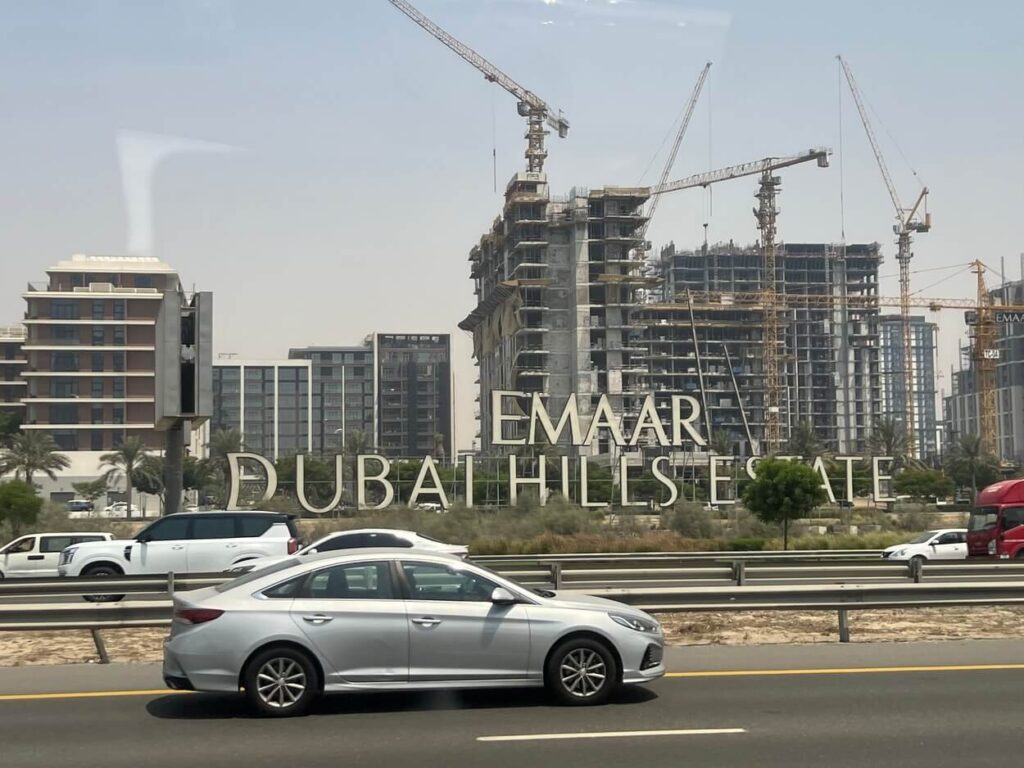
If Downtown Dubai symbolizes vertical luxury, then Dubai Hills Estate is its horizontal, residential counterpart. Located between Al Khail and Mohammed Bin Zayed roads, this masterplanned community by Emaar was envisioned as a green city in the desert—a harmonious blend of nature, luxury, and infrastructure.
Highlights include:
- Dubai Hills Golf Club, an 18-hole championship course with stunning views of the distant Burj Khalifa
- Dubai Hills Park, the largest public park within any Emaar project, featuring cycling paths, BBQ areas, and playgrounds
- Dubai Hills Mall, a newly opened shopping center with a focus on local experience and mid-premium retail
- Modern schools and hospitals designed for family living
This district is emerging as a premium residential zone for those who seek proximity to downtown without sacrificing suburban tranquility, complete with high construction standards and lush green spaces—a rarity in this part of the world.
Dubai International Financial Centre (DIFC) – Where architecture meets capital
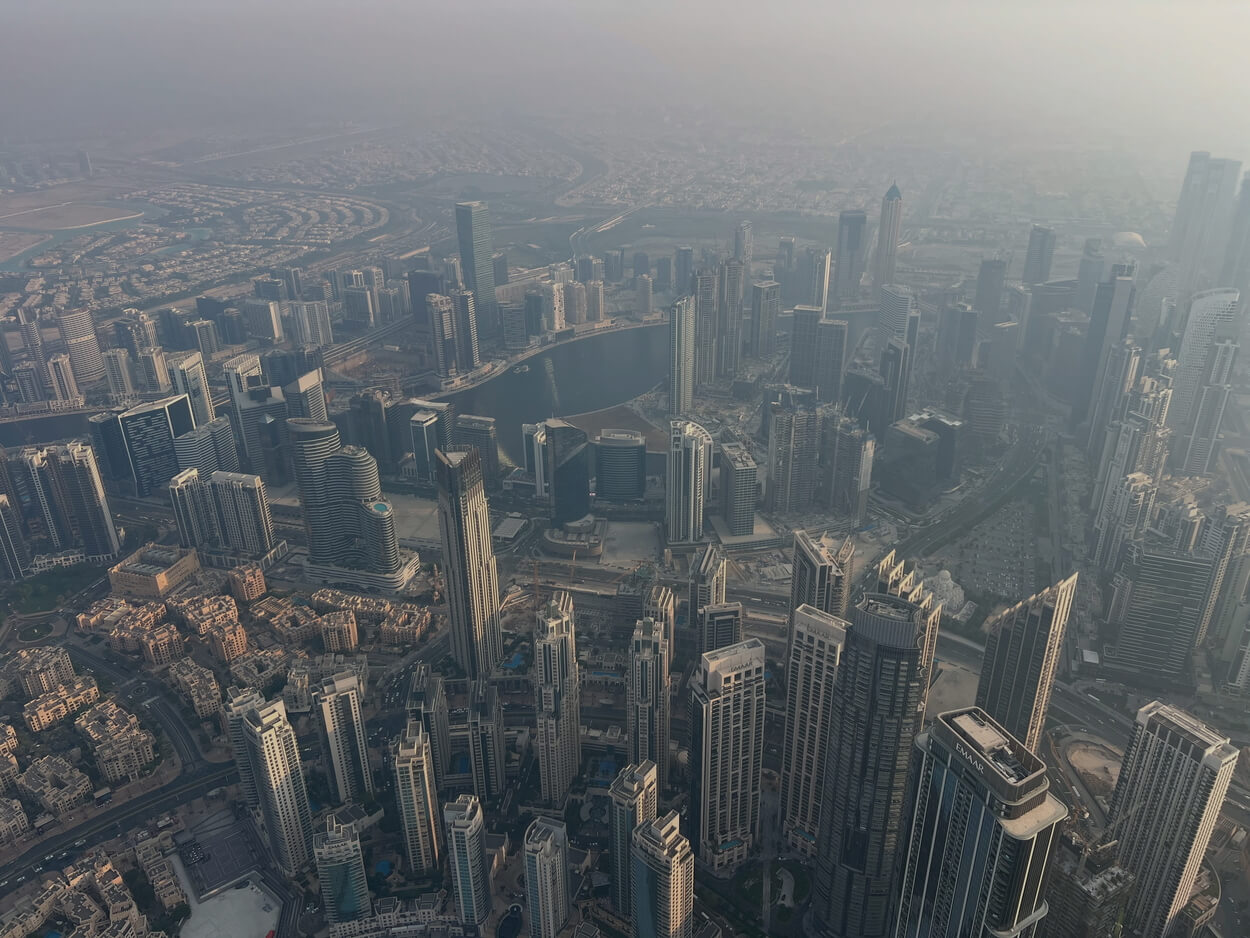
In Dubai, nothing is done halfway—not the height of skyscrapers, the width of boulevards, nor the scale of ambition. DIFC embodies this mindset. It’s not just a district; it’s a state within a state—with its own legal system based on British common law, specialized courts, and regulations offering maximum flexibility for investors and financial institutions.
DIFC’s key features:
- Over 4,000 registered firms, including investment funds, banks, insurers, and startups
- DIFC Courts – an independent judicial system specialized in commercial disputes
- Gate Avenue – a stylish mix of business, fashion, and hospitality venues
- Ultra-modern architecture: glass towers adorned with Arabic details, and meticulously maintained public spaces
- Approximately 35,000 professionals from around the world
The overall impression is that DIFC is the heart of Dubai’s economic DNA—a symbol of global ambition and urban planning excellence. From Goldman Sachs to the most innovative fintech startups, the world of finance has a home in DIFC.
Montenegro vs. Dubai: What Alabbar’s business model means for us
In the investment world, capital always seeks space. And when that capital comes from power centers like the UAE—where scale, speed, and ambition are the norm—it’s natural to ask: Is Montenegro ready for such a development philosophy?
Mohamed Alabbar is a proven visionary and builder. His projects in Dubai and Abu Dhabi emerged from a symbiotic relationship between the state and private capital, in systems where legal certainty for investors means speed, centralized authority, and minimal public resistance. In the Emirates, the state and the investor are often one and the same. In Montenegro, at least on paper, it’s quite the opposite.
Legal challenge: EU principles vs. UAE practice
Montenegro is an EU candidate country and is already obligated to align its legal system with EU legislation. This includes transparent tenders, public consultations, environmental impact studies, and spatial compliance—along with a prohibition on ad hoc decisions.
That approach is fundamentally incompatible with the operational model in the UAE, where things are resolved quickly through direct negotiations and political consensus within a streamlined system. In Montenegro, at least formally, this should not be allowed.
Yet in practice, we see otherwise.
Geographic paradox: Montenegro is not a desert
Dubai rose from the sand. Montenegro, in contrast, is rich in natural beauty—an asset and a limitation. Its strength lies not in expansive land for development but in landscapes that require protection: mountains, lakes, coastline, rare flora and fauna.
Yet these natural treasures are increasingly targeted by concrete mega-projects, with little institutional defense.
Montenegro’s problem: It’s not the billions, It’s the lack of ground rules**
The issue is not foreign capital per se. On the contrary, Montenegro needs it. The real problem is that there are no clearly defined rules to welcome it.
The national spatial development plan is either nonexistent or ignored.
Institutions remain weak, uncoordinated, and often lack the capacity or will to protect public interest. So we can’t blame investors for wanting the maximum—blame lies with the state that doesn’t define the minimum.
A past article by The Investor clearly warned that Velika Plaža in Ulcinj, reportedly a key target of Alabbar’s interest, remains legally and spatially unregulated. Without knowing what, when, how much, or to what standard can be built there, any investment—no matter how well-intentioned—is a potential threat.
Because before Alabbar—there must come the state.
The state first, then the investors
Montenegro needs investments—but not just any, not everywhere, and not at any cost. If we truly want to attract serious players, we must be a serious player ourselves: with clear spatial plans, legal certainty, ecological standards, and a development vision written not by a foreign investor, but by Montenegrin society.
Without it, investors won’t be building in Montenegro—they’ll be building over it.